

A provisions counter, barcoded and offline-ready
July 2026
Ezra Four 3-11 Enterprise is a provisions counter in Accra, and in July 2026 it became the first shop running Obali. Being first meant the install had no one else's experience to lean on. It also meant there was no margin for a slow start, because the till had to be selling on the same day the shop opened its doors.
A new shop, not a migration
Most point of sale work is a replacement: something is already ringing up sales and you have to swap it out without losing a day's trade. This was not that. The shop itself was new, so there was no existing counter to migrate, no historic stock file to reconcile, and no half-remembered pricing to inherit.
That removes one set of problems and creates another. A new shop has no habits yet. Whatever the counter does on the first morning is what the staff will keep doing, so getting it right on day one matters more than it would in a replacement, where people already know the rhythm of the job.
The till they were coming from
The owners were not new to us, or to running a shop. They had a previous shop, and we had installed QuickBooks POS 2013 for them there. That is worth stating plainly because it is our own work we are describing: a desktop till, tied to one Windows machine, from a product line Intuit no longer sells.
Software like that does not fail dramatically. It just quietly stops fitting. It has no answer for a receipt that has to carry Ghanaian tax lines, no useful story about mobile money, and nothing to say about what happens when the machine it lives on has a bad day. Knowing exactly what they had been living with is the reason we knew what the new counter had to do differently.
Opening day
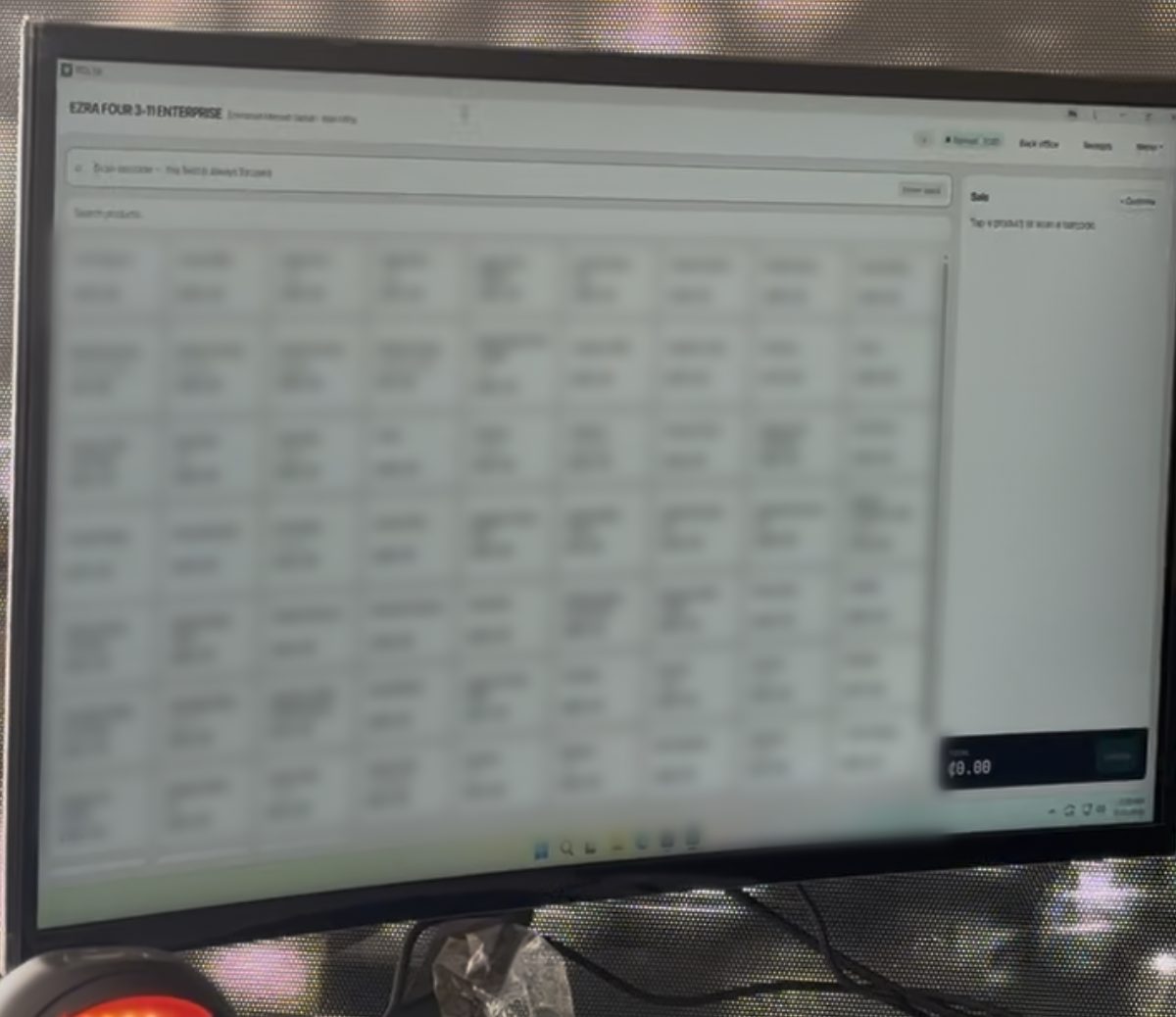
We opened the shop with them. The till, the back office, the receipt printer and the scanner were installed, configured and verified in place, and the counter took its first real sale the same day.
Verified is the word doing the work there. Hardware that prints in a demo and jams on a Saturday afternoon has not been installed, it has been delivered. Every piece was tested on the counter it would live on, with the stock it would be scanning.
The catalogue was the work
Installing a till takes an afternoon. Getting a real shop's stock into it is the part that decides whether it is still in use in the second week. We opened with about 70 lines, each carrying its barcode, its price and its expiry date.
Expiry tracking mattered more here than it would in most retail. Milk and cooking oil have dates on them, and a counter that cannot tell you what is about to turn finds out from a customer. Attaching that at import time meant the shop never had to retrofit it later across everything it sells.
That catalogue is now past 400 lines, and we did not add them. It grew roughly six-fold under its owners, which only happens when the people at the counter can add a product themselves without calling anybody. We imported what we were given and stopped: we did not restructure their pricing, rename their products into something tidier, or impose a category tree that suited the software rather than the shop.
One person, then three
The counter opened with one person on it. It now takes three.
We are not going to pretend the till caused that; a shop grows for many reasons and most of them have nothing to do with software. What it does show is that the counter absorbed the change. Two more people were trained on it without us going back, which is the more useful claim and the one we can actually stand behind.
What we are not claiming
We did not run a before-and-after measurement, so this page does not tell you that sales rose or that stock losses fell. There was no "before" at this shop to measure against, and a case study that invents the number is worth less than one that admits the gap.
What we can say is narrower and true: the shop opened on the counter we installed, it has been in daily use since July 2026, the catalogue has grown roughly six-fold under its owners, and the counter went from one operator to three without us returning to make that possible.
What we would measure next
For the next shop we would agree the numbers before the install rather than after: time to close out a day, the share of sales rung through the scanner rather than keyed by hand, and how often stock is written off past its expiry date. Those are cheap to capture from the counter itself, and they are the ones that tell an owner whether the till paid for itself.
If you are opening a counter, or still running something like that 2013 till, that conversation is free and takes about half an hour.
Tell us what's breaking. We'll tell you what it takes to fix it.
A 30-minute consultation, no obligation.